Ceiling Fan Installation: DIY vs. Hiring a Pro
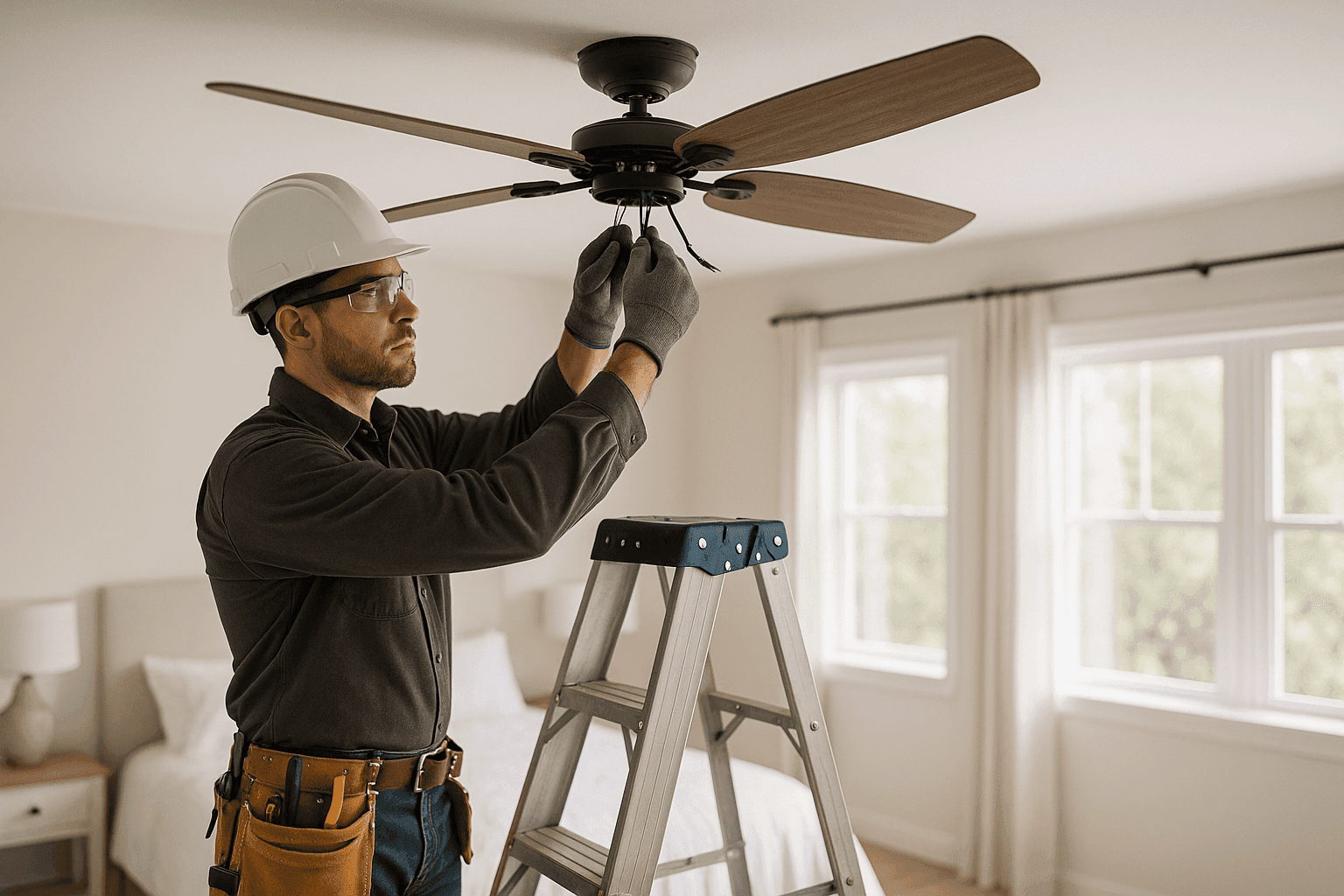
Thinking about upgrading your home with a ceiling fan? It sounds simple. But the truth? It’s a project that can quickly get tangled—literally and figuratively.
At Heintz Electric, we see homeowners wrestle with ceiling fan installations all the time. Some jobs are smooth. Others end in frustration, flickering lights, or worse. If you’re debating between rolling up your sleeves or calling a pro, let’s cut through the confusion.
DIY Ceiling Fan Pros & Cons ⚡
Many homeowners are tempted to DIY a ceiling fan install. It looks easy—just a few screws and wires, right? Not quite.
Pros of DIY
- Save on labor costs: No service fee.
- Instant gratification: Install it when you want, at your pace.
- Learning experience: Gain hands-on skills.
Cons of DIY
- Hidden wiring complexity: Modern homes can have confusing circuits. One wrong wire means tripped breakers or a dead fan.
- Heavy lifting: Fans are awkward to hold overhead for long stretches.
- Risk of code violations: Local electrical codes (per the National Electrical Code, or NEC) are strict. Missing a step could mean a failed inspection—or a hazard.
- Warranty worries: Many manufacturers void warranties after DIY installs.
Professional Installation Benefits
There’s a reason so many people search for "Electrical System Installation near you." A licensed electrician brings more than tools.
- Code compliance: Pros know the NEC and local codes inside out.
- Proper support: Ceiling fans are heavy. Standard light boxes may not hold up. An electrician ensures a safe, secure mount.
- Quick troubleshooting: What takes DIYers an afternoon, a pro solves in minutes. No guesswork.
- Protected warranties: Many ceiling fan brands require professional installs to keep your warranty valid.
- Clean finish: No scuffed ceilings or wobbly fans.
Curious about our approach? Our ceiling fan installation service is designed for peace of mind.
Safety Considerations
Electricity isn’t forgiving. Even a simple ceiling fan installation can be dangerous if you don’t respect the basics.
- Always switch off power at the breaker—not just at the wall.
- Test wires with a voltage tester—never assume they’re dead.
- Double-check support boxes: Standard electrical boxes are NOT always rated for ceiling fans.
- Watch for old wiring: Homes built before 1985 may lack modern grounding or have brittle wires.
The National Fire Protection Association (NFPA) warns that improper electrical work is a top cause of house fires. When in doubt, don’t risk it.
Step-by-Step: What’s Involved in Installation
Whether you’re a DIYer or watching a pro, here’s what a ceiling fan install usually involves:
- Turn off power at the breaker.
- Remove the old fixture.
- Check or upgrade the ceiling box to a fan-rated version.
- Assemble the fan as per manufacturer’s instructions.
- Mount the bracket and hang the fan motor.
- Connect wiring according to color codes—black to black, white to white, green or bare copper to ground.
- Secure blades and light kit.
- Test the fan and lights.
- Install any wall controls or remotes.
Simple in theory, but every ceiling hides its own surprises.
Wiring Complexity: More Than Meets the Eye
Wiring isn’t just about matching colors. Fans with lights often need separate switches or remote controls. Older homes may have no ground wire, or incompatible wiring layouts. Mistakes here can mean flickering, humming, or even electrical shocks.
If you hit a wiring puzzle, it’s best to pause and call an electrician—before you end up with a spaghetti bowl of wires overhead.
Code Compliance: Why It Matters
Electrical codes exist for a reason. Improperly installed ceiling fans can come loose, overheat, or short-circuit. Local inspectors check for:
- Fan-rated junction boxes
- Correct wire gauge and connections
- Proper grounding
- Secure mounting
Failing an inspection means more work—and possibly a fine. If you’re selling your home, a poor install can delay closing.
When to Call a Pro
Any time you spot:
- Aluminum wiring
- No ground wire
- Crumbling insulation
- Unfamiliar wire colors
- A box that wiggles or seems undersized
Don’t gamble. Call an electrician company with real residential experience. If you’re in West Little River, our electrician specialists are ready to help.
Quick Safety Checklist Before You Begin
- Power OFF at the breaker
- Voltage tester ready
- Proper ladder—no balancing on chairs!
- Ceiling box labeled “fan rated”
- All tools and parts within reach
If any of these are missing, hit pause.
Common DIY Mistakes
- Forgetting to secure fan blades—leading to wobble.
- Using a regular light box instead of a fan-rated one.
- Skipping the ground connection.
- Over-tightening screws and cracking the housing.
- Not balancing blades, which leads to noise and vibration.
Tools & Materials Needed
- Voltage tester
- Screwdriver set
- Wire strippers
- Ladder
- Ceiling fan rated box
- Wire nuts
- Electrical tape
Missing any? Your install day just got longer.
Timeline & Disruption: What to Expect
A pro can swap out a ceiling fan in about an hour, including cleanup. DIY may take an afternoon—longer if you hit a snag or have to run to the hardware store. Remember, you’ll need to clear space and possibly patch up ceiling drywall or paint.
Costs: DIY vs. Pro
DIY seems cheaper, but hidden costs add up—special boxes, tools, and possibly patching mistakes. Professional labor covers everything, plus peace of mind. For most, the difference is worth it.
Prevention & Maintenance Tips
- Dust fan blades monthly.
- Tighten screws yearly.
- Listen for clicking—could mean loose blades.
- Replace bulbs with fan-rated LEDs only.
Routine care keeps your fan humming and reduces future headaches.
FAQs
Can I install a ceiling fan without a ground wire? No. Fans must be grounded for safety.
Do all fans fit all ceilings? No. Sloped ceilings need special mounts. Low ceilings require “hugger” fans.
How do I know if my box is fan-rated? It should be metal or heavy-duty plastic, labeled for 35 lbs+.
When It’s an Emergency
If you smell burning, see sparks, or the breaker keeps tripping—stop. Shut off power and call for emergency electrical service immediately.
Final Thoughts
Installing a ceiling fan is harder than it looks. Safety, code compliance, and electrical know-how all matter. If you’re unsure, don’t risk injury or a house fire. Heintz Electric is here to help with licensed, friendly service—day or night.
Call Heintz Electric now — or reach us anytime at 877-315-8745 .