How to Install a Ceiling Fan with Light Safely
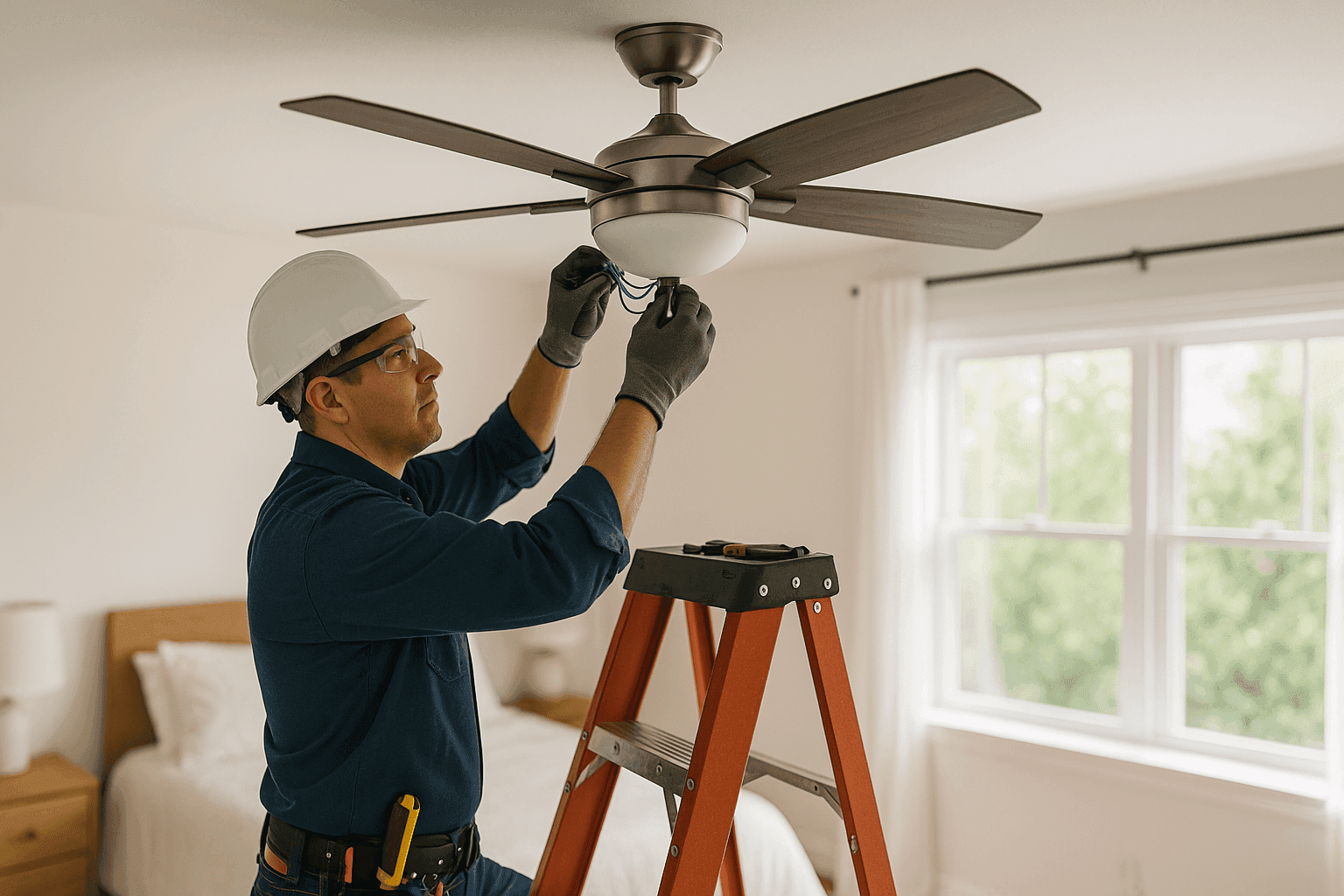
Is your living room feeling a bit stuffy? Maybe your bedroom light doesn’t quite cut it on warm nights. A ceiling fan with a built-in light can change how your space feels—making it brighter, cooler, and way more comfortable. But before you grab a ladder, there are some things every homeowner should know. Working with electricity isn’t just about matching colors and flipping switches. One wrong move can lead to shocks or even a fire risk.
At Heintz Electric, we see a lot of “DIY gone wrong” situations. In this guide, you’ll find clear steps, practical tips, and safety pointers—so you know exactly what’s involved when installing a ceiling fan with a light. And if it sounds risky, that’s because it can be. Let’s break it down.
Fan & Light Combo Benefits 🌀
Why combine a fan and a light? Simple: it’s a double-duty upgrade. One fixture, two solutions. Here’s why homeowners love them:
- Air circulation: Keeps rooms comfortable year-round.
- Lighting: Adds overhead brightness—perfect for reading or relaxing.
- Energy savings: Fans use less power than AC units, and modern LED lights cut bills even more.
- Space saving: No need for extra lamps or standing fans.
- Modern features: Many come with remote controls, dimming, or smart-home compatibility.
Installing a ceiling fan with light isn’t just an improvement—it’s a lifestyle upgrade.
Quick Safety Checklist
Before you start, safety comes first. Electricity doesn’t give second chances. Here’s what you need to check:
- Power is OFF: Flip the breaker. Double-check with a voltage tester.
- Correct box: Is your ceiling box rated for fan support? A standard one won’t do.
- Tools ready: Ladder, screwdriver, pliers, voltage tester, wire nuts, and electrical tape.
- Read the instructions: Every fan and light kit is different.
- Know your limits: If you’re unsure, stop here. Call a licensed electrician.
For more on safe wiring, the National Electrical Code (NEC) sets the standards used by professionals everywhere.
DIY vs. Call a Pro
Let’s be real. Installing a ceiling fan with a light isn’t the same as changing a bulb. Here’s what to consider:
- Skill level: Comfortable with wiring? Or just handy with a hammer?
- Ceiling height: Higher ceilings raise the stakes—and the ladder.
- Old wiring: Houses built before the 1980s may have outdated or fragile wiring.
- Support: An ordinary electrical box could let your fan crash down.
- Insurance: Botched DIY work may not be covered if something goes wrong.
Many homeowners realize halfway through that it’s more complex than it looks. If you want peace of mind, hiring an electrician through a trusted electrician company is a smart move.
What Pros Do On Arrival
A licensed electrician doesn’t just show up with a toolkit. Here’s what to expect:
- Assessment: Inspect your existing wiring, box, and ceiling support.
- Code compliance: Ensure everything matches the NEC and local regulations.
- Safe removal: Carefully disconnect old fixtures and test for live wires.
- New box install: Swap out the old box for a fan-rated, heavy-duty one if needed.
- Wiring: Connect wires correctly, following color codes and diagrams.
- Testing: Check for secure connections and proper grounding.
- Cleanup: Make sure the area is left safer than they found it.
This process isn’t just about doing the job—it’s about making sure your home stays safe for years to come.
Installation Steps: The Big Picture
Curious what the job actually looks like? Here’s a step-by-step overview:
1. Turn Off the Power
Never skip this. Find the right breaker and switch it off. Use a voltage tester to be sure.
2. Remove the Old Fixture
Unscrew the old light or fan. Carefully lower it and disconnect the wires. Keep a hand on the fixture at all times—no one likes a crash landing.
3. Check the Electrical Box
A standard plastic box won’t support the weight or vibration of a fan. Replace with a metal, fan-rated box secured to the ceiling joist.
4. Assemble the Fan
Most ceiling fans come in pieces. Assemble the blades, motor, and light kit on the ground. Follow the manufacturer’s instructions—every model is different.
5. Mount the Bracket
Secure the mounting bracket to the electrical box. Tug gently to check it’s rock solid.
6. Wire Connections
Match wires—usually black (fan), blue (light), white (neutral), green or bare (ground). Twist wires together with nuts, wrap with electrical tape, and tuck them neatly into the box.
7. Attach Fan and Light Fixture
Lift the assembled fan onto the bracket. Secure all screws tightly. Attach the light kit (if separate) and install bulbs.
8. Install Blades
Attach the blades using the provided screws. Make sure each is tight and evenly spaced for balance.
9. Add Canopy and Cover
Slide the canopy up and secure it. Install any decorative covers.
10. Turn On Power and Test
Flip the breaker back on. Test both the fan and light functions.
If anything buzzes, wobbles, or sparks—shut it down and call an electrician.
Testing & Troubleshooting 💡
Once your new ceiling fan with light is up, don’t walk away just yet. Here’s what to check:
- No movement or light: Double-check wiring and breaker.
- Wobbling: Blades may be uneven or screws loose.
- Noise: Rattling usually means something’s not tight. Hum could be electrical.
- Switch issues: Confirm wall switches and pull chains are set right.
- Remote not working: Replace batteries and check for interference.
If your fan hums, wobbles, or trips the breaker, don’t ignore it. These can be signs of a wiring problem or unsafe installation.
Materials & Equipment Checklist
Before you begin, check your toolkit:
- Voltage tester
- Phillips and flathead screwdriver
- Pliers
- Wire nuts and electrical tape
- Ladder (tall enough for ceiling height)
- Fan-rated electrical box (if replacing)
- Ceiling fan and light kit (with bulb)
- Mounting hardware (often included)
- Safety glasses
Having the right tools makes the job smoother and safer.
Common Mistakes to Avoid
Mistakes can cost you more than time—they can risk your safety:
- Using an old or incorrect box: Fans are heavy and vibrate.
- Ignoring wiring codes: Wrong connections can lead to shocks or fires.
- Overtightening screws: Can strip threads or crack mounting brackets.
- Rushing the job: Skipping steps is never worth it.
When in doubt, call an electrician. It’s always better to pause than regret.
Timeline & Disruption
A straightforward install can take 2–4 hours for a pro. For DIYers, expect longer—especially if you need to replace the electrical box or troubleshoot wiring. There will be some noise, dust, and possibly a little drywall patching, but with a careful approach, the mess stays minimal.
Prevention & Maintenance
Once installed, keep your fan and light running their best:
- Dust blades regularly: Cleaner air, less motor strain.
- Tighten screws yearly: Prevents wobbling.
- Check bulbs: Use the recommended wattage.
- Listen: Strange noises? Check connections.
Preventative care now means fewer headaches later.
When It’s an Emergency
If you smell burning, see sparks, or lose power unexpectedly—stop. Turn off the breaker and call a licensed electrician immediately. Electrical fires can start silently and spread fast. Safety always comes first.
FAQ: Ceiling Fan with Light Installation
Q: Can I use the existing wiring from my old light fixture?
Usually, yes—if it’s in good condition and code-compliant. But always inspect for wear or outdated wiring.
Q: What if my ceiling is sloped or extra high?
You’ll need special mounting hardware or an extended downrod. Some fans are made for angled ceilings; check your model.
Q: Are there special requirements for bathroom or outdoor fans?
Yes! Always use damp- or wet-rated fans in these spaces.
Q: Will a fan interfere with my smoke or carbon monoxide detectors?
Not if installed correctly. Keep detectors clear and test them regularly.
Costs & Time Factors
Professional installation costs vary based on ceiling height, wiring condition, and whether a new box is required. DIY can save on labor—but only if you’re truly comfortable with electrical work. Remember, mistakes can get expensive fast.
Signs You Need a Pro
- Unfamiliar or damaged wiring
- Flickering lights after install
- Breaker won’t reset
- Fan feels loose or unstable
- Noisy motor or wobbling blades
If any of these sound familiar, don’t risk it. An Ceiling Fans can prevent bigger issues down the line.
Seasonal Considerations
Summer heat makes fans a top priority—but winter use matters too. Many fans reverse direction to push warm air down, saving on heating bills. Consider seasonal maintenance each spring and fall.
Lighting Upgrades
Many homeowners use ceiling fan projects as a chance to refresh their lighting. From dimmable LEDs to smart bulbs, options abound. For more on lighting improvements, see our lighting services.
Final Thoughts
Installing a ceiling fan with light is more than a weekend project. It’s about keeping your home comfortable—and safe. If you’re unsure at any step, don’t push your luck. Electrical work is one place shortcuts just don’t pay off.
Call Heintz Electric now — or reach us anytime at 877-315-8745 .