LED vs. Traditional Lighting: Homeowner’s Guide
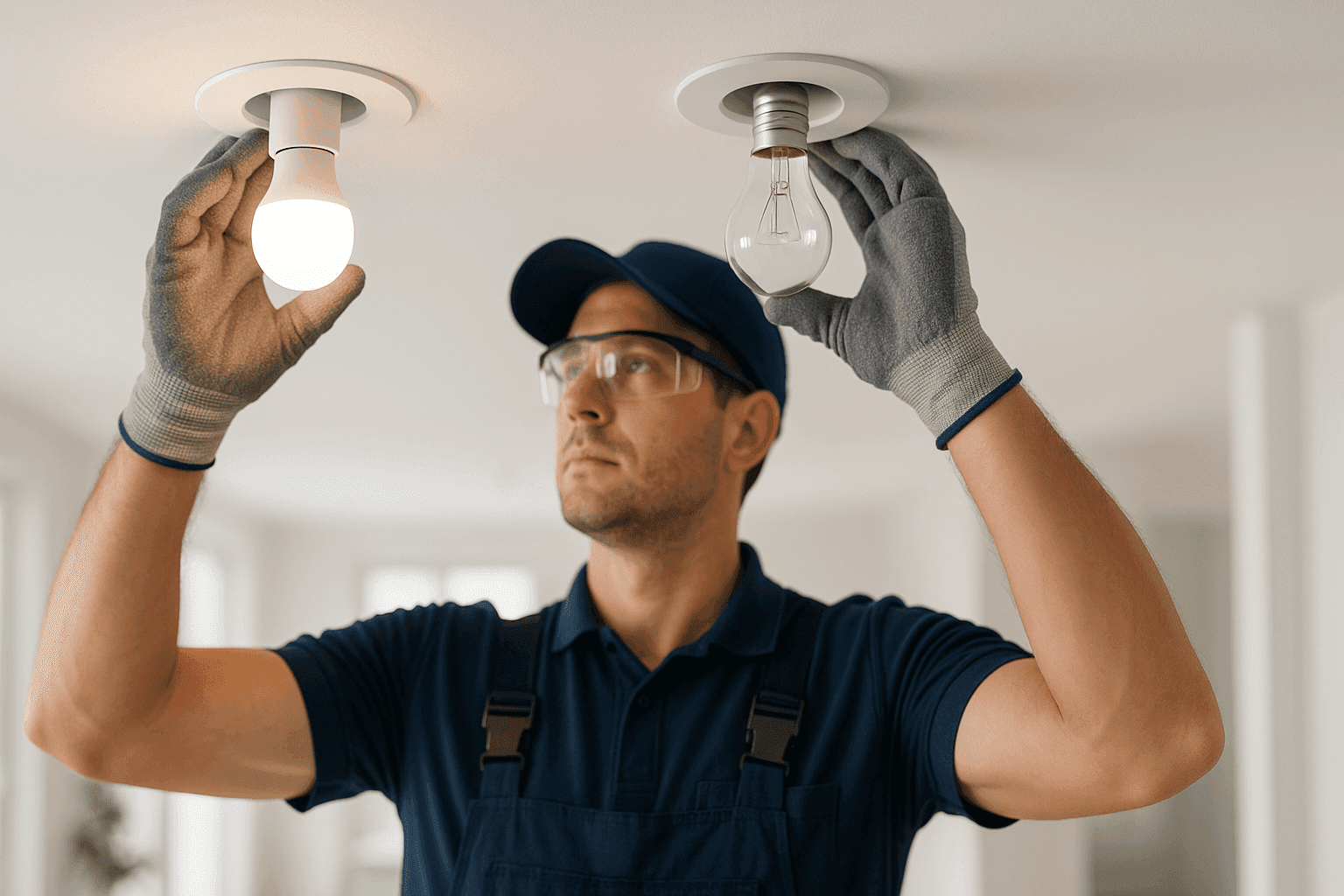
Are you staring at that old light fixture, wondering if it’s finally time to swap out those yellowing bulbs? Maybe your energy bill keeps climbing, or your living room feels more like a cave than a cozy retreat. You’re not alone. Lighting choices can be confusing, but the right decision can save you money, boost safety, and make your home shine.
At Heintz Electric, we help homeowners every day with these choices. As electricians, we see firsthand what works—and what tends to flicker out before its time.
LED Lighting Basics: Bright Ideas for Modern Homes 💡
Think of LED bulbs as the marathon runners of the lighting world. They last longer, use less energy, and stay cooler to the touch. But what exactly is an LED?
LED stands for Light Emitting Diode. Unlike traditional bulbs, LEDs don’t have filaments that burn out. Instead, they use semiconductors to create light—kind of like a tiny, super-efficient traffic light for your living room.
Key benefits of LED lighting:
- Longevity: Many LEDs last 15,000–25,000 hours—sometimes even more. That’s years of steady light.
- Energy Efficiency: LEDs use about 75% less energy than incandescent bulbs, according to the U.S. Department of Energy.
- Cooler Operation: Because they don’t get as hot, LEDs are safer around kids and drapes.
- More Options: Warm, cool, dimmable, color-changing—you name it.
Switching to LEDs is like trading in your clunky old sedan for a sleek new hybrid. The difference is immediate.
Traditional Options: Incandescent and CFL Bulbs
Before LEDs, most homes relied on either incandescent or compact fluorescent lamps (CFLs).
Incandescent Bulbs:
These are the classic bulbs you grew up with—the kind that get hot enough to fry an egg. They create light by heating a wire filament until it glows. Simple, but not efficient. Most of the energy turns into heat, not light. Lifespan? Usually just 1,000–2,000 hours.
CFL Bulbs:
CFLs were the “better” option for a while. They use less energy than incandescents and last longer (up to 8,000 hours), but they contain a small amount of mercury. That makes disposal tricky and raises safety concerns if one breaks.
Downsides of traditional bulbs:
- Shorter lifespan: You’ll be climbing ladders to replace them more often.
- Higher energy bills: They draw more power for less light.
- Heat: Can make rooms warmer and be a fire hazard in tight spaces.
Energy Costs: What’s the Real Price?
Let’s break down the numbers. LEDs might cost more up front, but the savings add up fast—like swapping a daily coffee run for a home brew.
- LED: Uses about 10 watts to produce the same light as a 60-watt incandescent.
- Incandescent: Burns through energy and needs frequent replacing.
- CFL: Sits somewhere in the middle, but disposal is a pain.
The U.S. Department of Energy reports that replacing a home’s five most-used lights with LEDs can save $75 per year.
Lifespan: How Long Will They Last?
Imagine changing a bulb and not needing to do it again for a decade. That’s the LED advantage. Incandescent bulbs, on the other hand, may burn out before you’ve even finished your next home project. CFLs hang on a bit longer but can’t compete with LEDs for the long haul.
Real-life example:
One Heintz Electric customer switched to LEDs in their kitchen and didn’t need a single replacement through five years of nightly family dinners and homework sessions.
Light Quality: Setting the Mood
Not all light is created equal. LEDs come in a range of color temperatures—think “warm” for bedrooms, “cool” for kitchens and offices. Incandescent bulbs naturally give off a warm, yellowish hue. CFLs sometimes start out a bit harsh, then mellow over time.
Tip:
Check the “Kelvin” rating on the box—2700K is warm and cozy, 4000K is clean and bright.
Safety First: Why Pro Installation Matters 🛠️
Swapping a bulb might seem easy. But upgrading to LED fixtures, adding dimmers, or setting up smart home controls? That’s where a licensed electrician is a must.
What a professional does:
- Checks wiring and circuits for compatibility
- Installs safe, code-compliant fixtures (per National Electrical Code)
- Ensures everything is grounded and protected from surges
- Helps you choose the right products for each room
Don’t risk a DIY disaster. Electrical System Installation near you means peace of mind—and a safer home.
Common Mistakes: What Homeowners Miss
It’s tempting to grab the cheapest bulbs and call it a day. But mismatched wattages, poor-quality LEDs, or ignoring fixture limits can lead to flickering, buzzing, or even fire hazards.
Watch out for:
- Overloading old fixtures with new, high-output bulbs
- Mixing incompatible dimmers and LEDs
- Ignoring manufacturer specs
Real-World Steps: How to Make the Switch
Ready to upgrade? Here’s how to make it easy:
- Make a List: Walk through your home and note which bulbs you want to replace.
- Pick the Right Bulbs: Match brightness (lumens), shape, and socket type.
- Check Fixtures: Not all old fixtures work with new LEDs—especially dimmers.
- Call an Electrician: For whole-home upgrades, specialty lighting, or if you’re unsure, call in the pros.
We offer lighting upgrades and installations to fit any home.
When Should You Call for Help?
- If you see flickering after switching to LEDs
- If you’re adding smart controls or dimmers
- When updating old wiring or panels
- If you want whole-home lighting design
Electrical issues aren’t just annoying—they can be dangerous. A professional eye can spot trouble before it starts.
Seasonal Considerations: Lighting Through the Year
Winter means longer nights and more time indoors. Spring and summer are perfect for updating outdoor lights, pool and spa wiring, or setting up landscape accents.
Tip:
Consider motion sensors or timers for added security and energy savings.
Environmental Impact: Green Choices for Your Home 🌱
LEDs use less energy and last longer, which means fewer bulbs in landfills and less strain on power plants. CFLs and incandescents create more waste—and, with CFLs, possible mercury pollution.
Upgrading your lighting is a simple step toward a greener home.
Lighting and Home Automation
Thinking about smart lighting or voice control? LEDs are the backbone of most home automation systems. Set schedules, adjust brightness, or change colors—all with your phone or a smart speaker.
Professional installation ensures everything works seamlessly (and safely).
Compliance and Safety: Meeting the Code
Electrical work in the home is regulated by the National Electrical Code (NEC). This means:
- All fixtures and wiring must meet specific safety standards
- Installations must be inspected if you’re remodeling or selling
- Smoke and carbon monoxide detectors should be checked during any upgrade
Not sure if your lighting is up to code? An electrician can help you review and update your setup.
Costs and Return on Investment
Switching to LEDs may cost more up front, but the payoff is real. Between lower bills and longer lifespans, you’ll make back your investment—sometimes in just a year or two. Plus, better lighting can boost your home’s value and appeal.
Which is Best for You?
If you want:
- Lower bills
- Less hassle
- Safer, cooler fixtures
- More control and options
LEDs are the clear winner for most modern homes. Older bulbs might be familiar, but they’re slowly burning out—literally and figuratively.
The Professional Difference: Why Hire an Electrician?
Upgrading your lighting isn’t just about screwing in a new bulb. It’s about making sure your home’s electrical system is safe, efficient, and ready for the future.
If you’re searching for an electrician company with a track record of safe, code-compliant work—including in Galesburg—Heintz Electric is ready to help.
Final Thoughts: Light Up Your Home with Confidence
Choosing the right lighting can transform your home, save money, and make every space feel just right. Don’t let old bulbs hold you back.
Call Heintz Electric now — or reach us anytime at 877-315-8745 .