Low Voltage vs High Voltage: What Homeowners Should Know
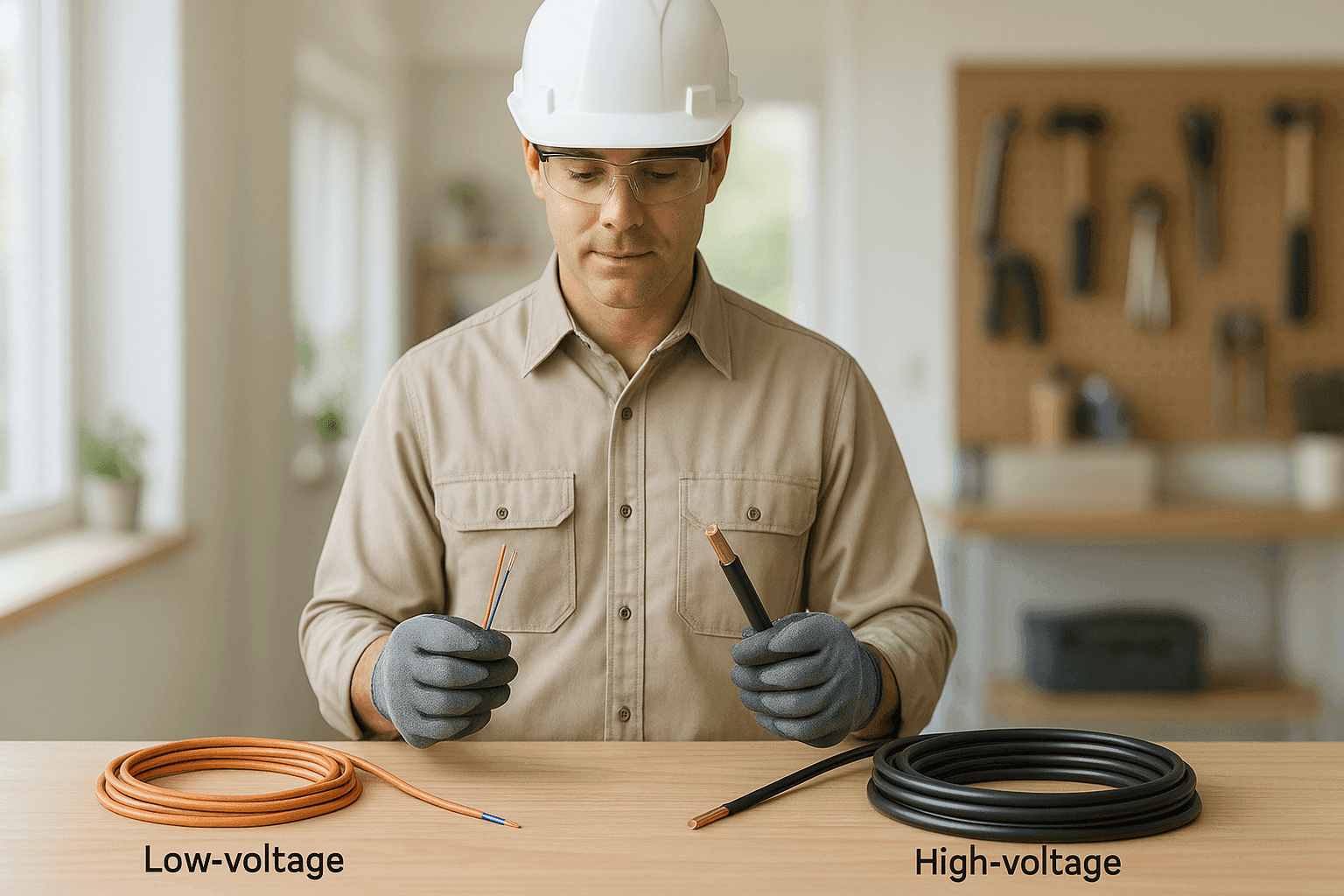
Every home runs on electricity, but not every wire or outlet is created equal. Some systems hum quietly in the background, keeping your lights and gadgets running. Others pack a serious punch—enough to handle an oven, a spa, or a garage EV charger.
Knowing the difference between low voltage and high voltage isn’t just for the folks in overalls and tool belts. It’s about keeping your family safe, avoiding expensive mistakes, and understanding when it’s smart to call an electrician.
What is Low Voltage? ⚡
Low voltage is like a gentle stream—enough to power your path lights, doorbell, or security system, but not enough to give you a serious jolt. In most homes, “low voltage” means anything under 50 volts. Common examples include:
- Landscape lighting
- Doorbells and intercoms
- Thermostats
- Security cameras and alarm systems
- Data cables for phone and internet
Low voltage wiring is often smaller and more flexible. It runs through attics, crawlspaces, and sometimes even outdoors. Because it’s less dangerous, building codes allow more flexibility in how it’s installed. Still, don’t let the “low” fool you—improper connections or frayed wires can spark fires or cause system failures.
High Voltage Systems
High voltage in the home is a different beast. Think of it as the main river feeding your entire house, carrying much more power. In the U.S., standard household outlets are 120 volts, while big appliances like dryers and ovens use 240 volts. High voltage systems cover:
- Main electrical panels and circuit breakers
- Kitchen and laundry appliances
- Air conditioners
- Electric water heaters
- EV chargers
- Pool and spa pumps
High voltage wiring is thick, rugged, and heavily insulated. Mistakes here aren’t just inconvenient—they can be fatal. That’s why electrical code (such as the National Electrical Code, NEC) has strict rules for installation, repairs, and inspections.
Why Voltage Matters in Your Home
Voltage isn’t just a number. It’s about what you can safely do yourself, and what needs a professional hand. Low voltage systems are usually safe for DIY projects, like swapping out a thermostat. High voltage? That’s where things get risky, fast.
Mixing up low and high voltage circuits can damage devices, void warranties, and put your family at risk. Always check the manufacturer’s instructions and local electrical codes before making changes.
Signs of Trouble: How to Spot Problems
You don’t have to be an electrician to notice something’s off. Here’s what to watch for:
- Flickering lights (could be a loose connection)
- Warm outlets or switches (signal of overload)
- Circuit breakers that trip often
- Strange buzzing or burning smells from panels
- Devices that suddenly stop working
If you spot these, don’t ignore them. Small issues can become fire hazards. For fast, local help, check out High-Voltage Wiring.
Safety & Applications
Different voltage systems serve different purposes. Here’s how:
- Low voltage: Ideal for areas where safety is paramount and direct contact is likely (kids’ bedrooms, outdoors, tech centers).
- High voltage: Delivers the muscle for heavy appliances and whole-house systems.
Always use the right wire for the job. Follow NEC guidelines and local rules. Never mix low and high voltage in the same junction box.
Installation: What’s Involved?
Installing low voltage is often a neat, tidy job. Think of running speaker wire through your walls or setting up a security camera system. It’s usually less invasive, with slim wires and easy-to-hide boxes.
High voltage work is more disruptive. It might mean cutting into drywall, pulling permits, and scheduling inspections. Only a licensed electrician should handle high voltage installation—especially for new circuits, panels, or anything involving water (like pools or spas).
Curious about “Electrical System Installation near you”? See our Low Voltage Systems service for more info.
Quick Safety Checklist 🧰
Before touching any home wiring:
- Turn off the power at the breaker box—don’t trust just the switch.
- Use a non-contact voltage tester to double-check.
- Wear rubber-soled shoes and work on a dry surface.
- Never work alone—have someone nearby in case of emergency.
- Don’t use metal ladders or tools near live wires.
- If unsure, stop and call an electrician.
DIY or Call a Pro?
Here’s a simple way to know: If the wire connects to anything that could cook a pizza, wash your clothes, or charge a car, don’t try it yourself.
DIY is fine for:
- Changing low voltage bulbs
- Swapping out batteries in a smoke detector
- Setting up plug-and-play smart home devices
Call a pro for:
- Adding outlets or switches
- Installing new circuits or panels
- Rewiring, especially in older homes
- Anything involving water or outdoor power
What Electricians Do On Arrival
Expect a thorough checkup. We’ll:
- Inspect the wiring and connections
- Test for proper voltage
- Identify code violations or safety issues
- Provide clear options for repairs or upgrades
We follow the latest NEC and local safety codes. Our team never cuts corners.
Prevention & Maintenance Tips
- Schedule annual electrical safety inspections, especially for older homes.
- Test smoke and carbon monoxide detectors monthly.
- Keep cords and wires away from moisture and heat.
- Label your breaker box for quick troubleshooting.
- Upgrade old fuse boxes to modern breakers.
Costs & Time Factors
Low voltage projects are usually quicker and less expensive. Think hours, not days. High voltage work takes more planning, permits, and safety measures, so expect longer timelines and higher costs—especially if your home’s wiring is outdated.
When It’s an Emergency
Some problems can’t wait:
- Sparking outlets
- Burning smells
- Power loss to critical appliances (fridge, oxygen machines)
- Water damage around electrical panels
Turn off the main breaker and call for emergency service. We offer 24-hour support for urgent electrical issues.
Common Mistakes Homeowners Make
- Using the wrong wire gauge for the job
- Overloading circuits with too many devices
- Mixing low and high voltage wires in one box
- Skipping permits or code inspections
- Ignoring warning signs—small sparks can become big fires
FAQ: Home Voltage Questions
Q: Can I run low voltage cables next to high voltage ones?
A: It’s usually not safe—keep them separate to avoid interference and safety risks.
Q: How often should I get an electrical safety check?
A: At least every 3–5 years, or before major renovations.
Q: Are LED lights low voltage?
A: Many are, especially if they use transformers or are labeled for 12V systems.
Timeline & Disruption: What to Expect
Low voltage upgrades? Usually done in a day, with minimal mess. High voltage projects (like panel upgrades or whole-house rewiring) can take a few days and may require short power shutdowns. Plan ahead—let your family know and move sensitive electronics out of the way.
Materials and Equipment
- Low voltage: Thin wires, small transformers, plug-in power supplies
- High voltage: Thick copper wires, heavy-duty breakers, armored conduit
Always use UL-listed materials that meet code. Don’t cut corners with cheap parts.
Seasonal Considerations
Winter storms? Summer pool parties? Each season brings its own risks. Have an electrician check your outdoor outlets, pool and spa wiring, and generator connections before heavy use.
When to Hire a Professional
If you’re unsure, it’s always safest to get help. Certified electricians understand both the art and science of wiring. They can spot hidden hazards, recommend upgrades, and keep your home safe for years.
Looking for an electrician who can tackle both low voltage and high voltage with confidence? We’re here to help.
Call Heintz Electric now — or reach us anytime at 877-315-8745 .