How to Prepare Your Home’s Electrical System for Winter
Winter hits hard. The last thing you want is a cold house, flickering lights, or an unexpected outage when the temperature drops. If you’re not sure your home’s electrical system is up to the task, you’re not alone—many homeowners forget to prep until winter is already here.
At Heintz Electric, we see the same winter snafus every year. Frozen outlets, stressed circuits, and backup generators that sputter out just when you need them most. Here’s how you can avoid those headaches and keep your family warm and safe all winter long.
Winter Risks: Why Electrical Prep Matters ❄️
Cold snaps can push your home’s electrical system to the limit. Space heaters, electric blankets, and holiday lights all draw extra power. But it’s not just about comfort—improperly maintained wiring or overloaded circuits can cause real safety hazards.
Winter storms are notorious for causing outages and power surges. Ice and snow can invade outdoor outlets or damage exposed wiring. According to the National Fire Protection Association (NFPA), electrical failures or malfunctions are one of the leading causes of home fires in the colder months. Prevention isn’t just smart—it’s essential.
Home Preparation Checklist: Start Here
Think of your home like a winter athlete. It needs a warm-up and a check-up before the season starts. Here’s your step-by-step playbook:
- Test Heating Circuits: Turn on your electric heat or baseboard units before the first cold front. Listen for odd noises. Smell for burning or mustiness. If breakers trip or units don’t heat evenly, don’t ignore it.
- Inspect Exterior Outlets: Make sure all outdoor outlets, extension cords, and holiday light connections are protected with weatherproof covers. Moisture and electricity never mix.
- Backup Power Review: Fire up your generator (if you have one) and let it run for at least 15 minutes. Check the fuel, oil, and battery. If you don’t have a backup power source, now is the time to consider one.
- Check Smoke & CO Detectors: Replace batteries and test every detector. Winter means closed windows, so CO leaks from faulty furnaces or space heaters are especially dangerous.
- Surge Protection: Plug sensitive electronics (televisions, computers, smart home devices) into good-quality surge protectors. Winter storms can send power spikes through your lines.
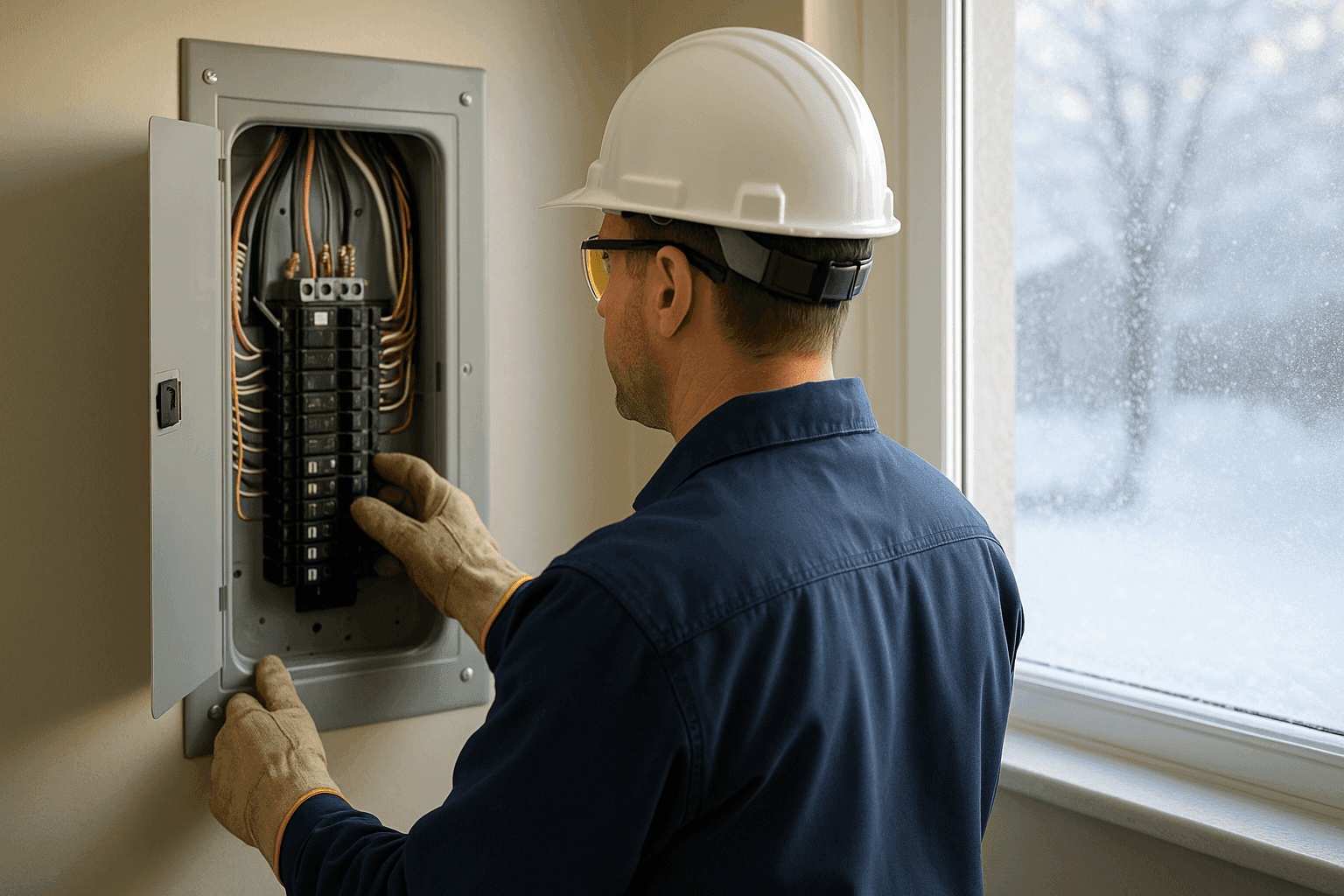
- Panel & Breaker Inspection: Open your electrical panel and look for rust, corrosion, or loose breakers. If anything looks off, it’s time to call an electrician.
- GFCI Outlets: Test all GFCI (Ground Fault Circuit Interrupter) outlets—especially those in kitchens, bathrooms, and garages. Press the “test” and “reset” buttons to make sure they’re working.
- Outdoor Lighting: Check all pathway and exterior lights. Replace burned-out bulbs and make sure fixtures are securely fastened.
- Appliance Cords: Inspect the cords of space heaters and portable appliances. Damaged cords can short out or cause fires.
Spotting Trouble Before It Strikes
Small warning signs can mean big trouble down the road. Be on the lookout for:
- Flickering or dimming lights when major appliances run.
- Warm or discolored outlets.
- Breakers that trip and won’t reset.
- Buzzing sounds from walls or outlets.
- Unusual burning smells.
These aren’t quirks—they’re signals your system needs attention. If you notice any of these, don’t wait.
Think Like an Electrician: The Professional Approach
When an electrician from Heintz Electric arrives for a winter checkup, here’s what they’ll typically do:
- Perform a full maintenance inspection, checking all critical points from panel to outlet.
- Use thermal cameras to spot overheating wires hidden behind walls.
- Test circuits for load capacity to ensure your winter appliances won’t overload the system.
- Inspect all connections for corrosion and tightness.
- Review grounding and bonding to ensure your system is safe.
- Check for code compliance based on the National Electrical Code (NEC).
It’s like giving your home a physical before winter’s toughest days.
DIY vs. When to Call a Pro
Some tasks are safe for confident DIYers—testing GFCIs or changing detector batteries, for instance. But anything involving your electrical panel, rewiring, or generator installation should always be left to a licensed electrician.
If you’re unsure, remember: electricity isn’t forgiving. It’s better to spend a little on a professional now than risk a dangerous situation later.
Prevention & Maintenance: Your Winter Safety Net
Routine maintenance is your best defense. Schedule a yearly electrical safety inspection before winter, ideally in the fall. This can catch small issues before they snowball.
Heintz Electric offers thorough Safety Checks as part of our service. From surge protection to heating circuit reviews, we handle the details so you can focus on staying warm.
Emergency Readiness: Power Outages and Storms ⚡
Winter storms are unpredictable. When the lights go out, you want to be ready—not scrambling for candles in the dark.
- Know where your flashlights and batteries are.
- Keep your generator fuel stored safely and ready to go.
- Consider investing in a transfer switch for your generator to make emergency power seamless—and much safer.
- If you rely on medical equipment, talk to your utility company about priority restoration plans.
Frequently Asked Questions
What should I do if my breaker keeps tripping in winter?
Repeated tripping signals an overloaded circuit or a fault. Move some devices to another outlet. If it continues, call an electrician—don’t just reset and forget.
Are space heaters safe to use?
Space heaters are safe when used properly. Plug them directly into wall outlets (never extension cords), keep them away from flammable materials, and always turn them off before bed.
How often should I test my smoke and CO detectors?
Test them monthly. Replace batteries every six months. Replace the entire unit every 7–10 years, or as recommended by the manufacturer.
Seasonal Considerations: What Changes in Cold Weather
Cold weather can make old wires brittle. Snow and ice can creep into outlets or fixtures. Heating systems that haven’t run in months can pull more current than usual. These seasonal stresses make winter the most demanding time for your home’s electrical system.
Common Mistakes Homeowners Make
- Ignoring warning signs like flickering lights or tripping breakers.
- Overloading outlets with space heaters or holiday lights.
- Using indoor extension cords outdoors.
- Skipping annual maintenance.
It’s easy to put off, but the cost of inaction can be much higher.
Signs You Need Immediate Help
Call an electrician right away if you notice:
- Burning smells or smoke from outlets or panels.
- Arcing or sparking sounds.
- No power to critical appliances, even after resetting breakers.
- Water leaks near electrical fixtures.
Don’t take chances with electrical safety.
Timeline & Disruption: What to Expect
Most winter prep tasks take just a few hours. Larger projects, like generator installation or rewiring, may take a day or two. A well-prepped home means fewer disruptions when the weather turns nasty.
Materials and Equipment: What You Might Need
- Replacement outlet covers (weatherproof for outdoors)
- Fresh batteries for detectors
- Quality surge protectors
- Flashlights and battery-powered lanterns
- Generator fuel and oil
Your electrician will bring specialized tools for inspections and repairs.
When to Call a Pro: Know Your Limits 🛠️
If you’re not comfortable, don’t risk it. Electrical work isn’t a YouTube project. Professional electricians are trained for a reason—your safety and your home’s future depend on it.
If you’re in the area and searching for an electrician company, Heintz Electric is ready to help—day or night.
Your Safe, Warm Home Starts Here
Winter can be tough on your home, but a little preparation goes a long way. Don’t wait until the first freeze to start thinking about your electrical system. From safety checks to backup generators, Heintz Electric is here to keep your lights on and your family safe.
Call Heintz Electric now — or reach us anytime at 877-315-8745 .