Whole-Home Surge Protection vs. Plug-In Devices
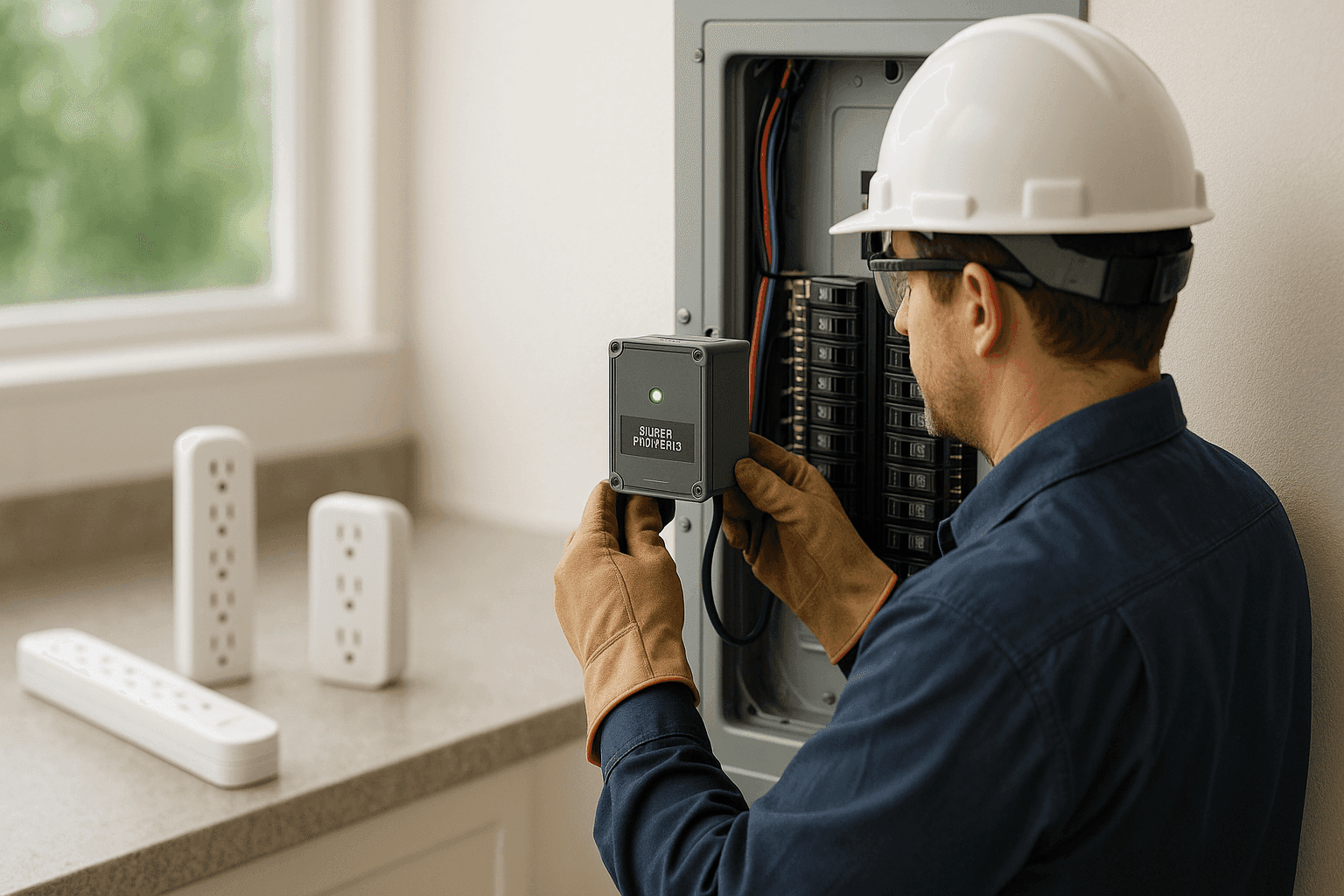
Electricity keeps your home alive—lighting rooms, charging devices, powering every comfort. But with every flick of a switch, there’s a silent risk: power surges. They’re quick, invisible, and can destroy sensitive electronics in a single flash.
If you’ve ever wondered whether plug-in surge protectors are enough, you’re not alone. At Heintz Electric, we help homeowners navigate the maze of electrical safety, from Electrical System Installation near you to picking the right surge protection strategy. Here’s what you need to know.
Types of Surge Protection ⚡
A surge is a sudden spike in voltage, often so fast you wouldn’t notice—unless your TV or fridge suddenly stops working. Surge protection comes down to two main types: whole-home (panel-based) and plug-in devices.
Whole-Home Surge Protectors
These are installed directly at your electrical panel. Think of them as a gatekeeper for your entire house. When a surge tries to enter, the whole-home protector diverts the extra electricity safely into the ground. Everything on your circuits—appliances, lights, HVAC—gets covered.
Plug-In Surge Protectors
These are the familiar strips you buy at hardware stores. You plug them into wall outlets, then plug your devices into them. They offer a basic shield for whatever is plugged in, but nothing else.
Where Surges Come From
- Lightning strikes (even nearby)
- Downed power lines
- Utility grid switching
- Large appliances cycling on and off
- Faulty wiring or repairs
Surges aren’t rare. According to the National Fire Protection Association (NFPA), electrical failures and malfunctions are a top cause of house fires. Protecting your home isn’t optional—it’s essential.
Advantages & Limitations
Let’s compare these two options side by side.
Whole-Home Protection: The Umbrella for Your Home
- Covers every outlet: No matter where your electronics are plugged in, they’re guarded.
- Long-term value: Protects expensive appliances like refrigerators, laundry machines, HVAC, and more.
- Peace of mind: You’re not guessing if every outlet needs a separate protector.
- Reduces risk of fire: By stopping surges at the panel, you reduce the chance of damaged wiring or overloaded outlets.
Limitations
- Professional installation required: This isn’t a DIY job. A licensed electrician must install it safely.
- Upfront cost: It’s a bigger investment than plug-in strips.
- Doesn’t protect from surges generated inside the house: Sometimes, plug-in strips still make sense for sensitive electronics.
Plug-In Devices: Extra Layer or False Security?
- Easy to install: Just plug and go.
- Portable: Move them from room to room.
- Affordable: Low upfront cost.
Limitations
- Limited coverage: Only protects what’s plugged directly into that strip.
- Often misunderstood: Power strips aren’t the same as surge protectors—read the label.
- Can wear out fast: Surge protection capacity depletes after big hits, often with no warning.
Choosing What’s Best
The real question: Should you rely on plug-in strips, or do you need the full shield?
When Whole-Home Makes Sense
- Multiple expensive appliances
- Smart home systems
- Home office setups
- Frequent storms or unreliable power
If you want to protect your investment, a whole-home solution is the answer. Plug-in devices are great for extra-sensitive items, but they’re not a substitute for full coverage.
Professional Installation—Why It Matters
A whole-home surge protector is only as good as its installation. A licensed electrician ensures:
- Proper grounding and code compliance (refer to the National Electrical Code, NEC 2023)
- Safe integration with your Panels & Breakers
- Inspection for hidden wiring issues
DIY attempts can void warranties and leave you exposed. Don’t risk it.
Plug-In Strips: Still Useful?
Absolutely—especially for computers, entertainment systems, or medical devices. Add them as a second layer, but don’t expect them to save your entire home.
Quick Safety Checklist
- Check if your home has a surge protector at the main panel.
- Inspect plug-in strips for an indicator light—if it’s off, replace it.
- Avoid daisy-chaining strips (plugging one into another).
- Schedule regular Surge Protection to catch hidden risks.
Common Mistakes Homeowners Make
- Thinking a basic power strip is a surge protector.
- Ignoring the lifespan of plug-in devices.
- Overloading outlets with too many adapters.
- Skipping professional electrical inspections.
What Happens During Installation?
When you call an electrician, here’s what to expect:
- Assessment of your current electrical panel and grounding.
- Recommendation of the right surge protector size (measured in joules).
- Safe installation and testing.
- Instruction on using extra plug-in devices for sensitive spots.
Minimal disruption—most installations are done in a few hours.
Prevention & Maintenance
- Schedule periodic safety checks.
- Upgrade old panels and breakers if needed.
- Replace surge protectors after major surges or every few years.
Costs & Time Factors
- Whole-home surge protectors cost more upfront, but save money by preventing damage.
- Most installations are completed in one visit.
- Plug-in devices are cheaper, but may need frequent replacement.
When It’s an Emergency
If you smell burning, see sparks, or lose power to major appliances after a storm, call for emergency electrician services right away. Don’t wait—surge damage can lead to fires.
FAQ
Q: Can I install a whole-home surge protector myself?
A: No. Always call a licensed electrician. It involves high-voltage wiring and code compliance.
Q: How do I know if my surge protector is still working?
A: Look for indicator lights on plug-in strips. For panel protectors, schedule regular inspections.
Q: Do I need both types?
A: Yes—whole-home for general protection, plug-in for sensitive devices.
Seasonal Considerations
- Summer storms bring more lightning and risk.
- Winter power outages and generator use can cause surges.
- Schedule inspections before storm season.
Signs of Trouble
- Flickering lights
- Outlets that feel warm
- Tripped breakers
- Electronics failing suddenly
Don’t ignore these signs—call for help right away.
Timeline & Disruption
- Phone consult or in-person visit.
- Quick assessment.
- Installation in a few hours.
- Minimal interruption to your day.
Materials & Equipment
- Certified surge protector (UL 1449 listed)
- Proper tools for panel access
- Labeling and documentation for future service
Final Thoughts
Your home is full of technology—protect it like you would your car or your family’s health. Whole-home surge protection is the umbrella that shields everything, not just what’s plugged into a strip. Paired with professional installation and regular checks, it’s the best way to keep your home running safely.
Call Heintz Electric now — or reach us anytime at 877-315-8745 .